+86-0531-80960537
 seaman8577@gmail.com
 English
 Chinese
 Russia
 بالعربية

Many merchants promote that doors and windows have "extremely strong sound insulation" and "high efficiency in heat preservation", but the actual usage effect is far from satisfactory. By mastering these judgment methods, you can easily avoid such tricks and select truly practical doors and windows.
1. Judgment of sound insulation performance:
(1) Regarding glass: Double-pane insulating glass provides a sound insulation of approximately 30-40 decibels, while triple-pane insulating glass offers around 40-50 decibels. Laminated glass has a slightly better sound insulation effect than the same number of-pane insulating glass. The choice can be made based on the noise level (for streetside locations, a combination of triple-pane insulating glass and laminated glass is recommended).
(2) Check the sealing: The better the sealing performance of the doors and windows, the stronger the sound insulation effect. High-quality doors and windows will adopt multiple seals (usually 3-4 seals), and the sealing rubber strips are made of ethylene propylene diene monomer (EPDM), which has good elasticity and is not prone to aging. After closing the doors and windows, the frame and the door panel fit tightly without any gaps.
(3) Listen to the sound: During the purchase, you can conduct a test in the store. After closing the doors and windows, listen to the degree of reduction in external noise. If you can clearly feel that the noise has decreased significantly and there is no obvious sound leakage, it indicates good sound insulation performance; if you can still hear clear noises or feel air leakage, it indicates poor sound insulation performance.
2. Judgment of insulation performance:
(1) Observe the frame: The wider the insulation strip (PA66 nylon strip) of the breakaway aluminum doors and windows, the better the insulation effect. The common width is 14-20mm. Avoid choosing PVC insulation strips (which have fast heat conduction and poor insulation).
(2) Inspecting the glass: The thicker the thickness of the air layer, the better the insulation effect. Additionally, you can choose Low-E coated glass, which can effectively prevent heat transfer, providing insulation in winter and heat retention in summer.
(3) Examine energy-saving parameters: The energy-saving performance of doors and windows is clearly classified (as per the national standard GB/T 8478-2020), with grades ranging from 1 to 6. Grade 1 indicates the best energy-saving effect. When purchasing, you can check the energy-saving test report of the product to avoid false advertising by merchants.
Additional note: Avoid falling into the misconception that "the thicker, the better". The insulation and soundproofing performance of doors and windows is the combined effect of the frame, glass, and sealing. Simply thickening the frame or the glass, if the sealing is not good, the effect will be greatly reduced.
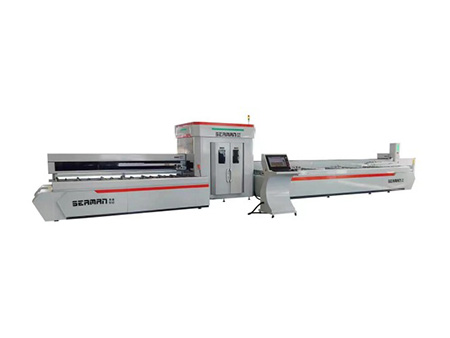
As a global supplier of door and window equipment, "Senman Machinery" adheres to the spirit of "Seaman", stands at the forefront, strives for innovation, and aims to become a leader in the industry. Based on the development of industry predecessors, we strive to learn and actively make progress.
Sign up today for hints, tips and the latest product and news.